Secrets of the Thames - ⭐️⭐️⭐️⭐️⭐️
For several years, starting when I was doing my Masters in 2013, I volunteered and worked for the Portable Antiquities Scheme in London. The vast majority of archaeological finds that come in are things found on the foreshore of the Thames. Further to this, one of many projects I worked on involved planned surveys of the foreshore at different points along the river (my internship focused on finds from in front of the Tower of London). Therefore, it can easily be said that my early career involved a lot of work with “foreshore finds” and Mudlarks searching on the Thames.
Hearing that my former manager, Kate Sumnall, was working on an exhibition specifically looking at these finds, I became incredibly excited to visit London Museum Docklands to see what finds would be included. Although my intention was merely to see what familiar faces I might come across in the exhibition, I was as always intrigued to see how the subject was handled, what display decisions would be made and what forms of community representation would be used. I was certainly not disappointed!
So here are my thoughts and some of the highlights from the Secrets of the Thames exhibition, running until 1 March 2026.
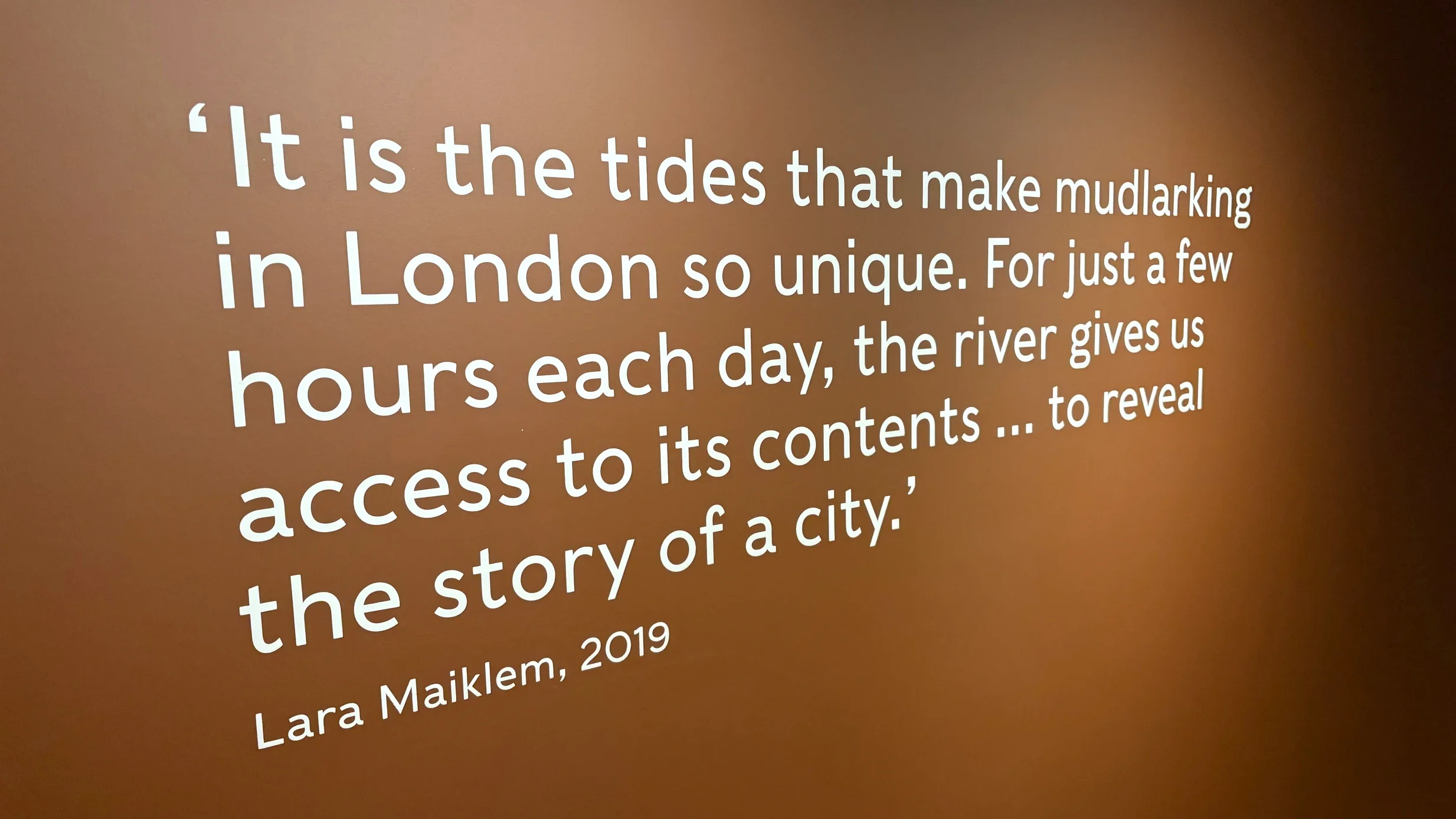
A quote from author and mudlark, Lara Maiklem.
Life and Death on the Thames
The exhibition really picks up on the vibrant changing nature of the river. Much like the ebbs and flows of the tide, the river represents all aspects of the human life course. From children’s toys, to wedding rings, to funerary objects, the Thames has captured all stages of our lives for thousands of years.
A fairly common find I remember recording were lead toys. In the days before plastic, lead was used to make children’s toys as it was fairly cheap and easily moulded. The little toy plates, complete with a fish meal, would have been used by children in the 1600s and well into the 1800s. Even early Christmas crackers in the 1900s might have lead toys in them.
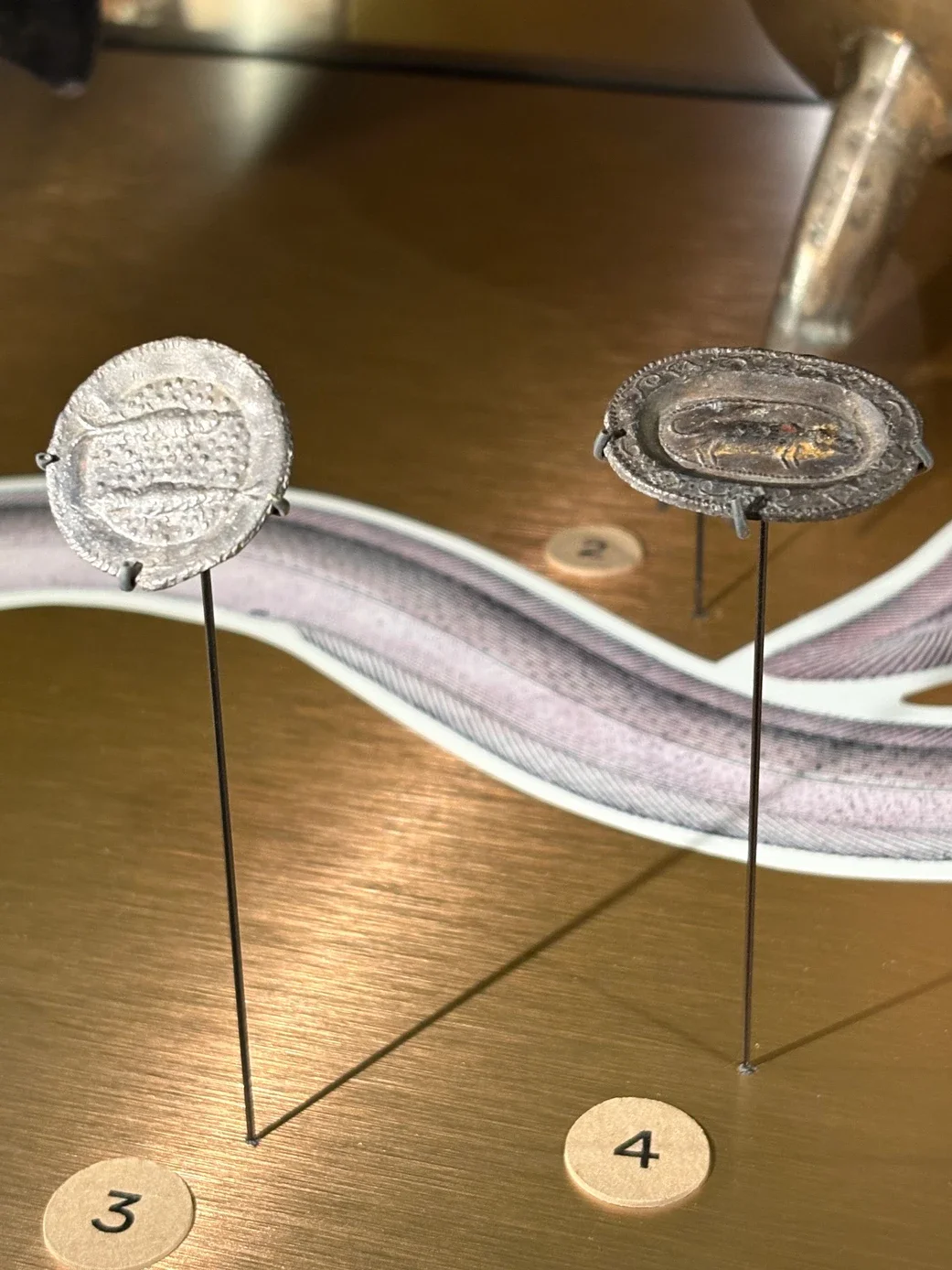
A pair of lead plates used as toys, complete with meals in the design.
At the opposite end of the spectrum is the incredible memento mori object (things designed to reminder us that one day we will die). It shows the face of a woman on one side and death, in the form of a skull, on the other. It’s believed to have been a bead from a rosary, dating it no later than 1571 when Elizabeth I was excommunicated from the Catholic Church and rosaries became illegal.
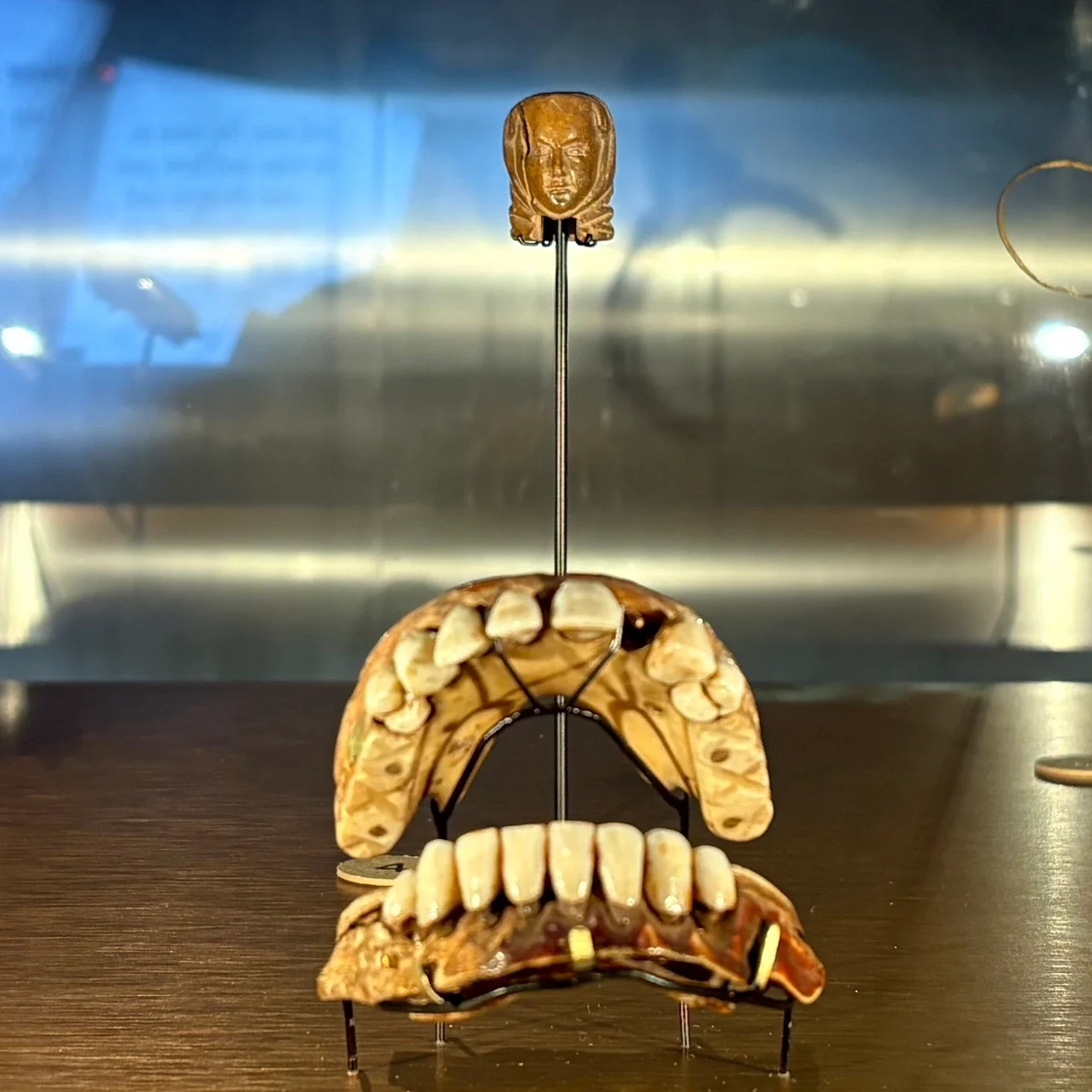
The face of a woman, possibly the Virgin Mary, on one side.
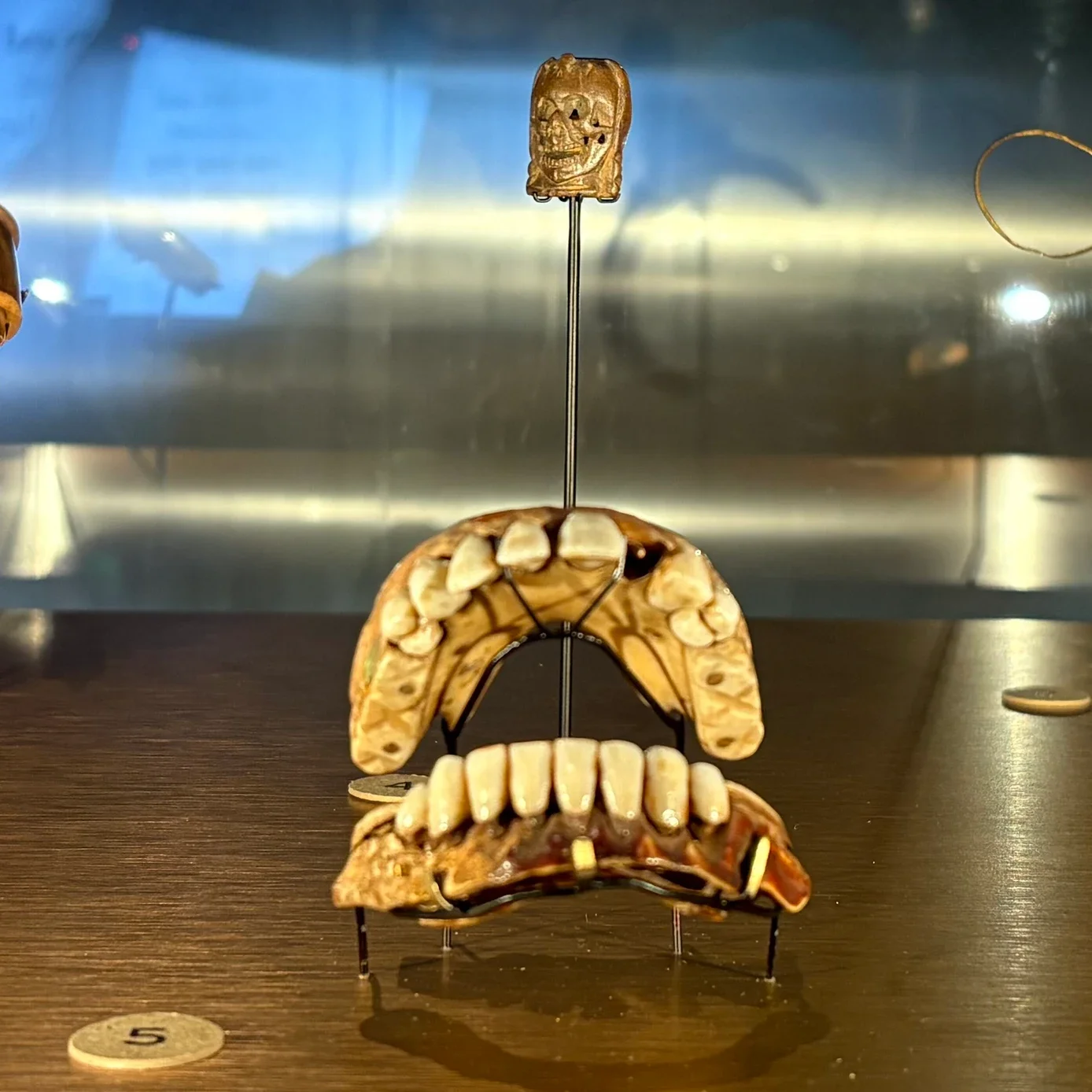
The image of a skull, representing death, on the other side.
Artistic responses
Alongside the incredible array of objects were some wonderful installations from artists, representing some of the objects found in the Thames and the lives and work of those who are out there discovering them. Artistic responses are a fairly common form of interpretation for exhibitions like this. but the variety of forms and the subjects covered were truly outstanding.
Some of the artists chose to use their work to get visitors thinking about the impact all these objects in the Thames might have on the future. Although it’s great these objects can tell us about the past, they are essentially the outcome of thousands of years of littering. With an increasing “throw-away” society, the more stuff that ends up in the Thames (or our oceans) will have a huge impact on the planet. Kabir Hussain’s “Velocipde” shows a hire bike (sometimes known as “Boris Bikes” after the former mayor Boris Johnson) encased in concrete as if fossilised in the riverbed. As visitors we imagine what objects thrown in the river today might look like to archaeologists of the future, and focuses on the disposable commodities we are using at ever increasing rates.
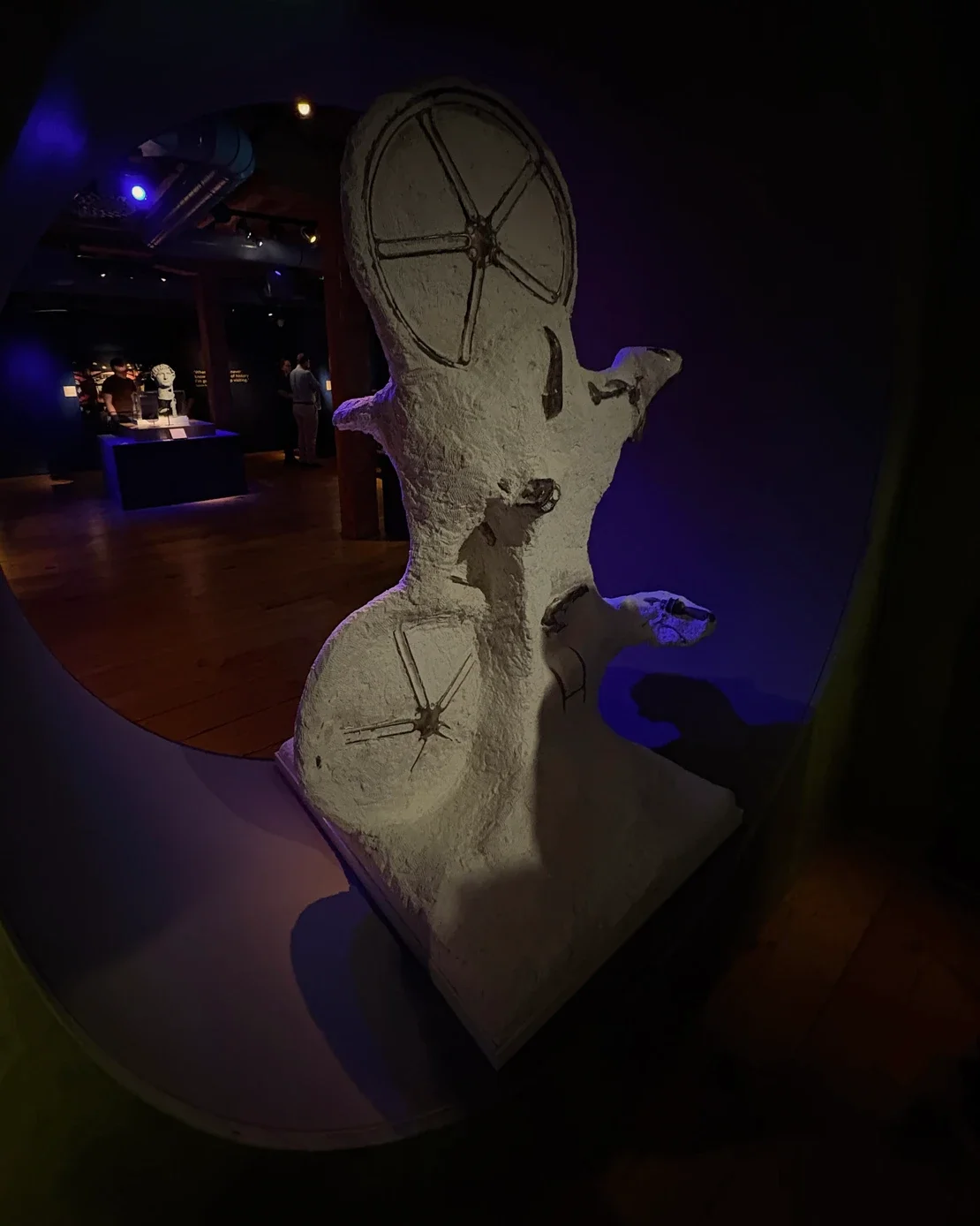
“Velocipede” Kabir Hussain, 2025
Not only were there responses from artists, but even the design of some of the objects was done in an artistic way. The group of stunning Roman glass micro tesserae (tiny mosaic cubes) were both aligned in a glorious rainbow and also had a beautifully photographed image to go alongside them, resembling a wave, with a shadow below reminiscent of objects seen through water. Perfect for these river finds. This shows just how important a decent photograph, stylistically done, can add another layer of fun to a display.
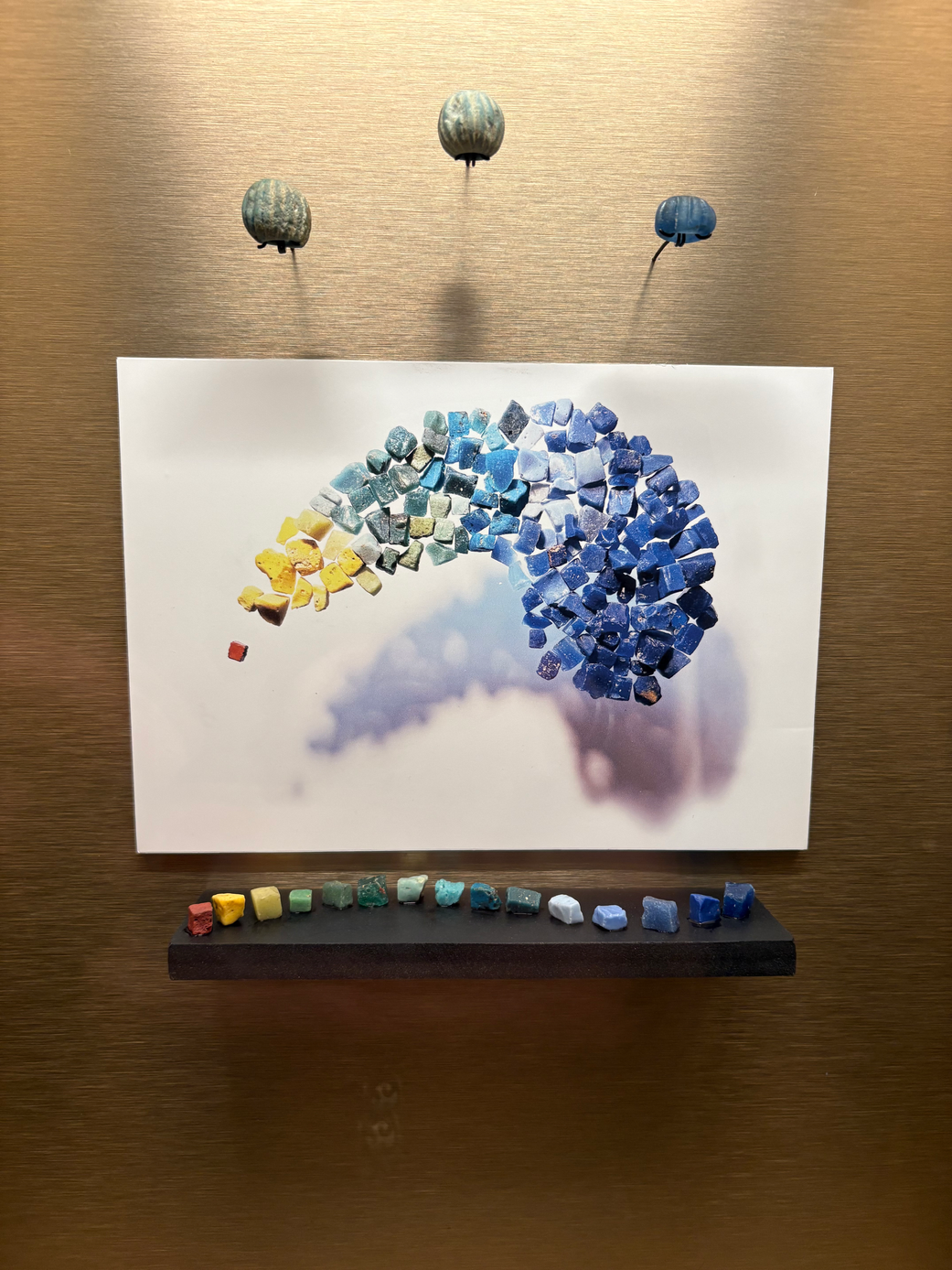
A beautiful display of tiny colourful glass tesserae (mosaic cubes).
The voice of the Mudlark
What was also brilliant about this exhibition was how those who actually go out onto the foreshore of the Thames had their experiences captured and presented alongside the displays. A whole room was dedicated to recording and interpreting finds, with testimonials on film from some of the mudlarking operating on the Thames today. However, peppered throughout the exhibition were also references to those who came before.
The painting of the Thames at night showing two mudlarks by Henry Pether, really captures the early origins of the mudlarking tradition. Starting out as a pursuit of the poor, who sought things they could sell or use on the foreshore, it has developed greatly over its centuries of fascination. Nowadays, those spending their time on the foreshore mostly want to add to the richness of our history than their own bank accounts. Though the early origins of this tradition are very respectfully recorded and shared in the introduction to Secrets of the Thames.
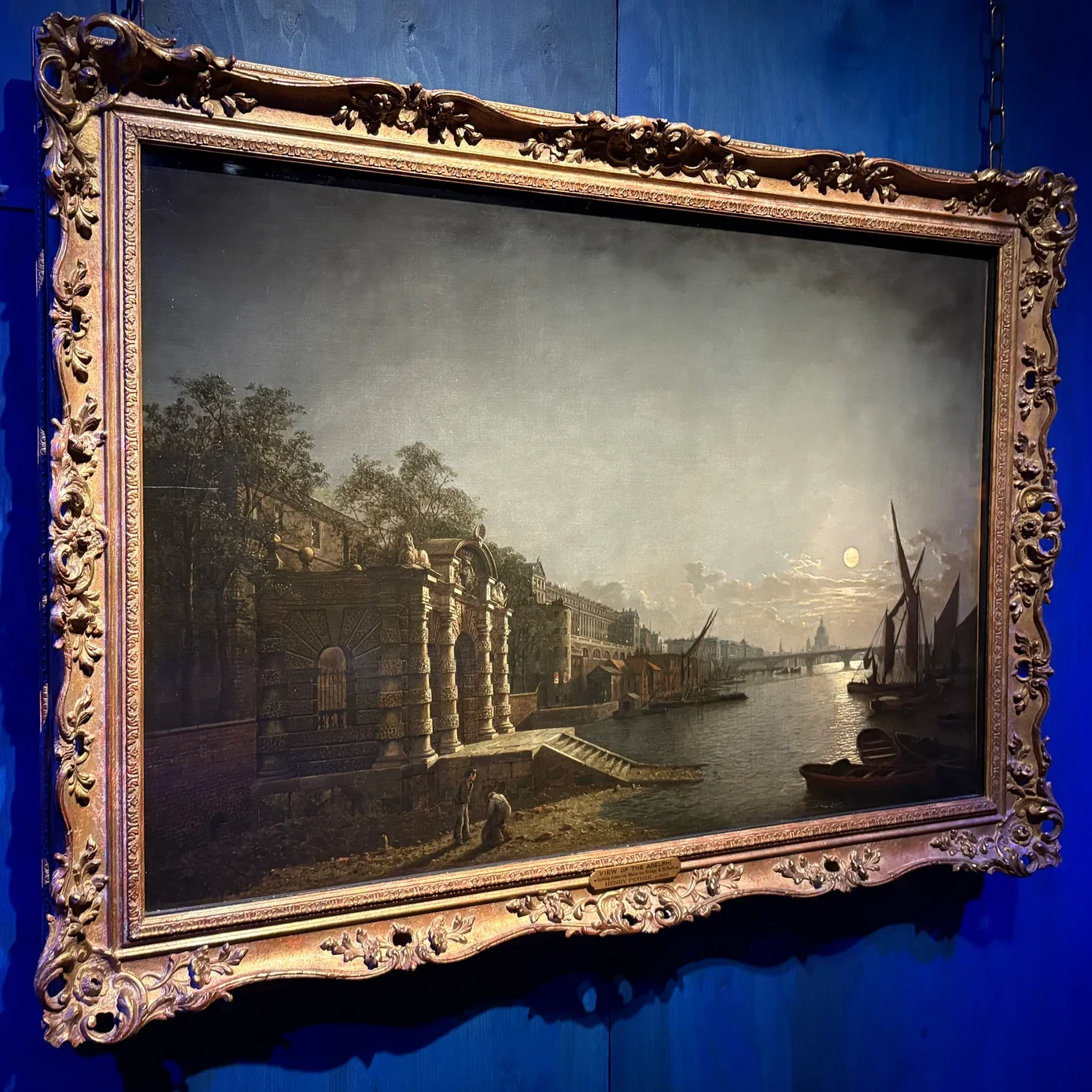
“York Water Gate and the Adelphi from the river, by moonlight” Henry Pether, c. 1850.
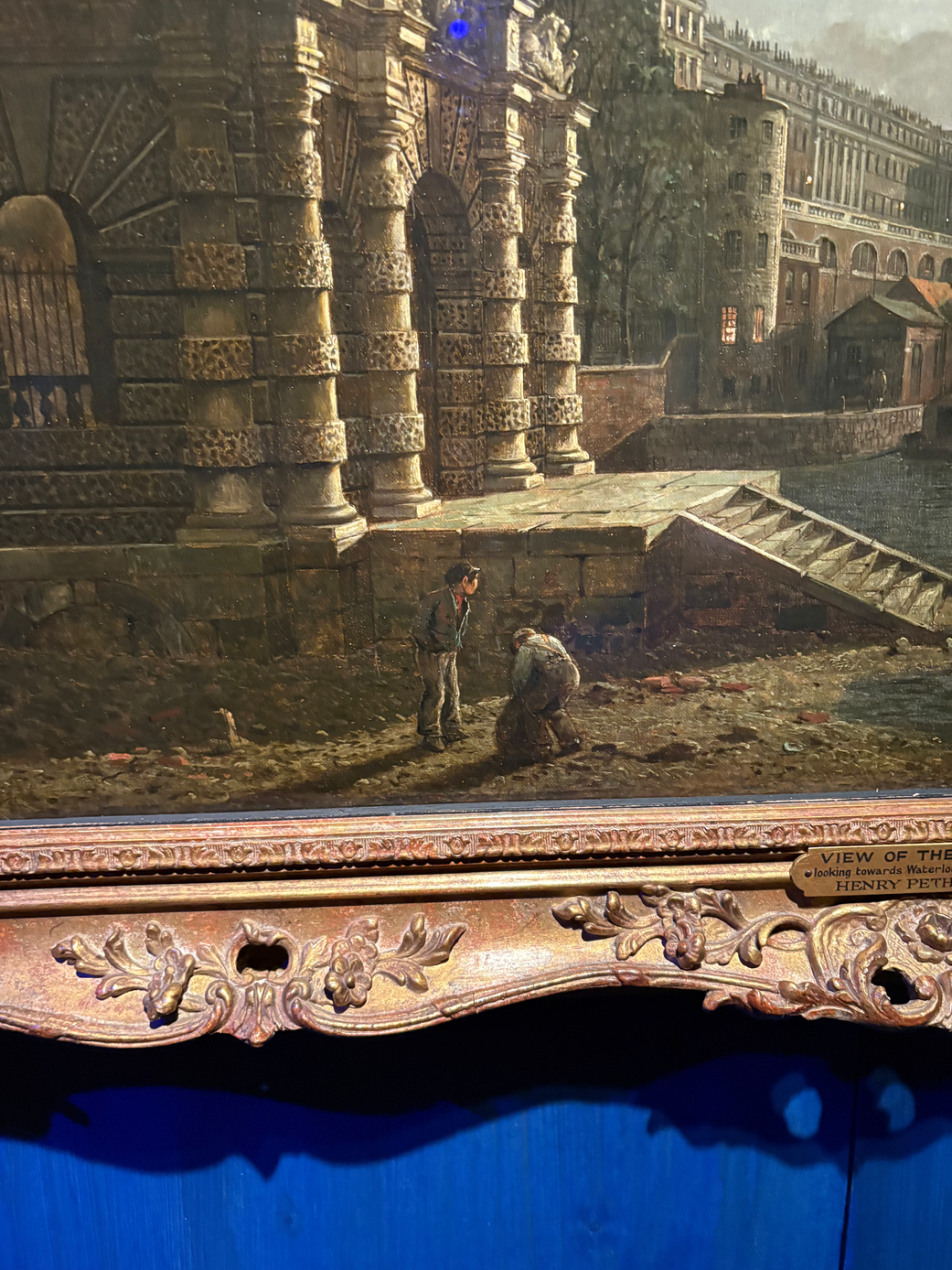
A closeup of Henry Pether’s painting showing two mudlarks on the foreshore gathering finds.
Obligatory c*cks
And of course there was a case full of cocks. That is all… well done!
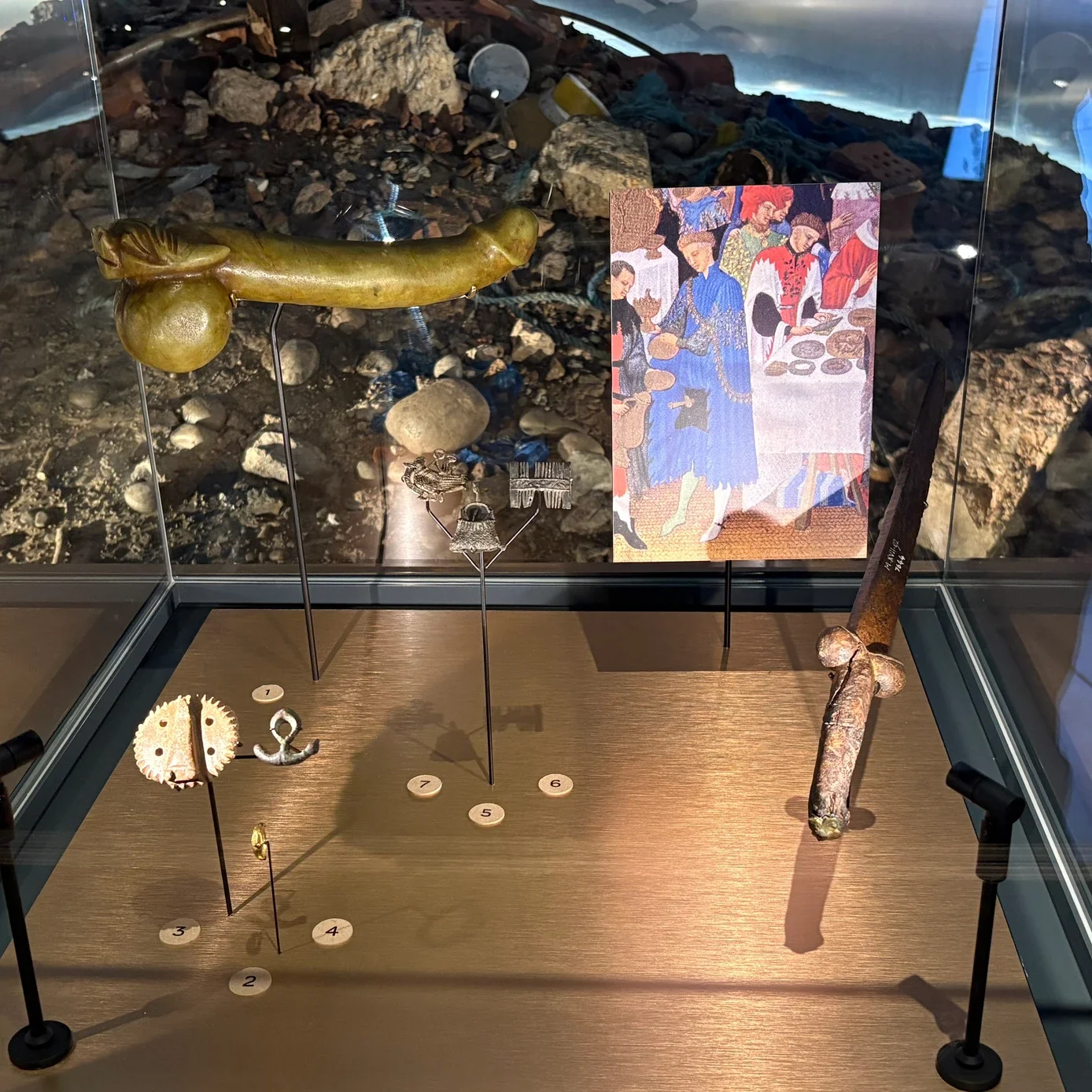
A display case filled with phallic objects.